close
Choose Your Site
Global
Social Media
Views: 0 Author: Site Editor Publish Time: 2026-10-20 Origin: Site
A tissue jumbo roll quality inspection is the cheapest insurance a converter can buy before a container ships. Hidden defects — out-of-spec GSM, moisture that is too high, weak wet strength, a crushed 76 mm core, or unmarked splices — cause breaks on the rewinder, rejected finished rolls and machine downtime that no unit-price discount can recover. Before shipment, every tissue parent roll (mother roll) should be checked against the agreed specification and the ISO 12625 tissue test methods. This checklist walks through the full QC process: document and certification checks, visual roll inspection, laboratory tests (grammage, moisture, tensile and wet strength, brightness, absorbency), dimensional and roll-weight checks, AQL sampling and third-party inspection. It applies to toilet, facial, napkin, kitchen and hand towel parent reels.
Jumbo rolls are bought by weight and run at high speed, so a quality problem multiplies across the whole lot. A 1–2% grammage error changes the number of finished rolls per ton; moisture above spec means you pay for water and risk mould in transit; a soft spot or an unflagged splice tears the web at 200 m/min and stops the line. Incoming-goods inspection catches these issues while the goods are still the supplier's responsibility, supports a claim with measured data, and stops a bad reel reaching your embossing and lamination stage. For a buyer, verifying tissue mother roll quality before you buy is what separates a reliable tissue jumbo roll supplier from a cheapest-quote trader.
Inspection starts before the reels are touched. Confirm the paperwork matches the order and the destination market:
Proforma invoice / contract & packing list: product grade, ply, GSM, width, core, roll diameter, net and gross weight, number of reels, and trade terms all match.
Mill test report / certificate of quality: batch grammage, moisture, tensile strength, brightness and absorbency, stamped by the mill and dated to the lot.
Management certification: ISO 9001 quality management is a baseline; ask for FSC (FSC-C) chain-of-custody where virgin or certified pulp is claimed.
Market-specific compliance: food-contact declarations for napkin and kitchen paper that touches food; recycled-content claims should be backed by documentation.
Shipping documents: container/loading plan, bill of lading and the reel count, cross-checked against the container loading and weight guide.
A supplier that cannot provide a batch test report or copies of ISO 9001 / FSC is a warning sign regardless of the sample.
Walk the lot and inspect a representative sample of reels on the warehouse floor:
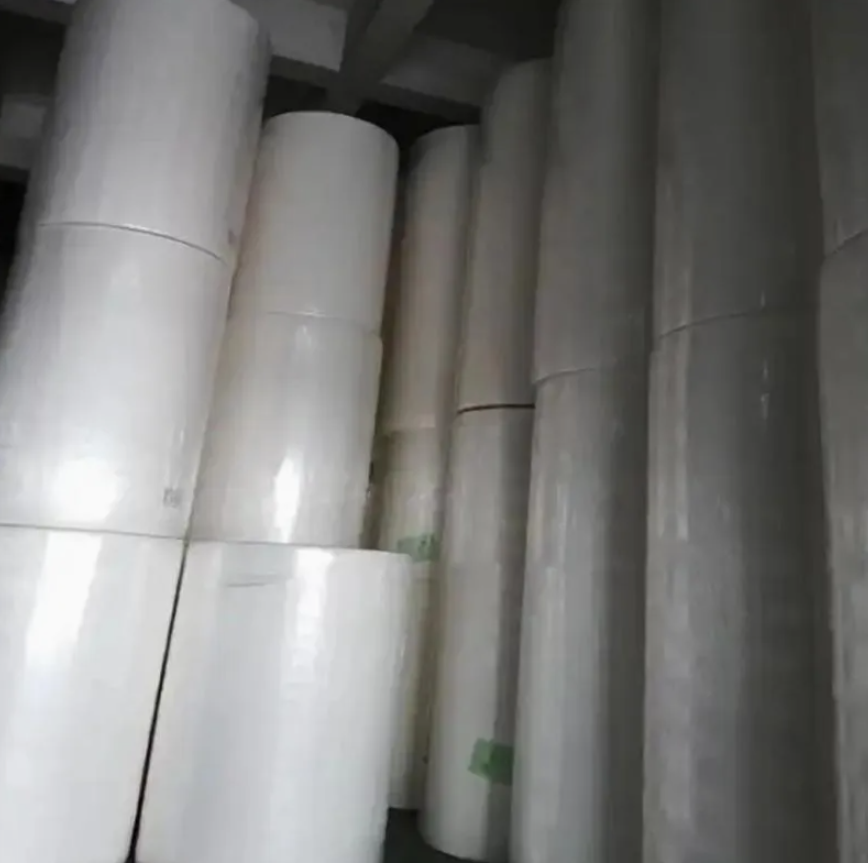
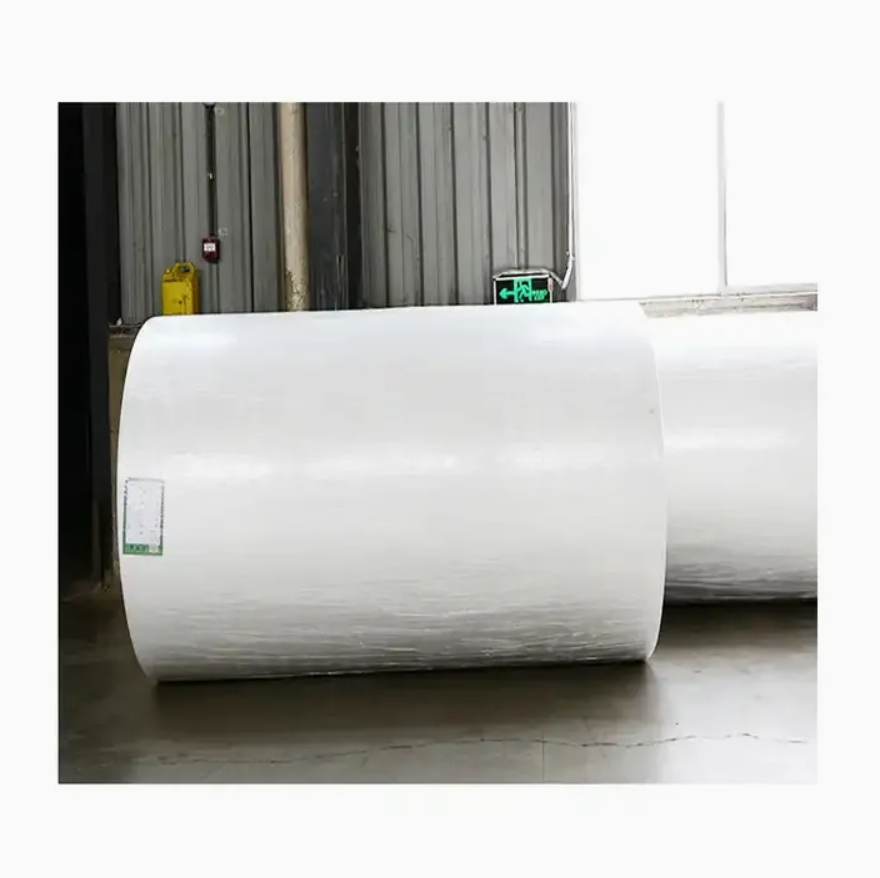
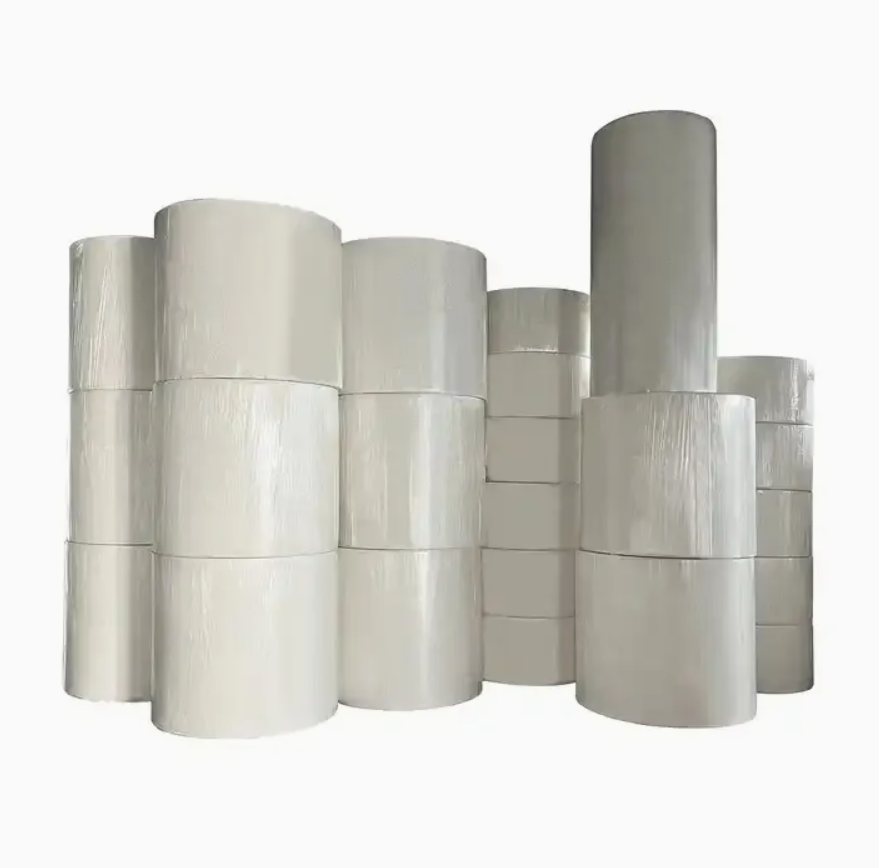
Roll ends and winding: reels should be evenly wound with clean, flat, circular end faces, no telescoping, no soft/collapsed spots and no crushed or out-of-round core.
Sheet defects: look for holes, tears, slits, creases, paper-machine wire marks, fibre bundles, dark specks, oil stains and excessive dust or lint.
Splices / joins: splices must be limited to the number agreed in the contract (commonly 0–2 per reel for export jumbo rolls), clearly flagged with coloured tape or a paper marker at the reel edge so the converting operator is ready.
Colour and brightness: white grades should be consistent across the lot, with no yellowing or shade variation between reels.
Odour and moisture: no musty smell, damp patches or water stains on the outer wrap or end faces.
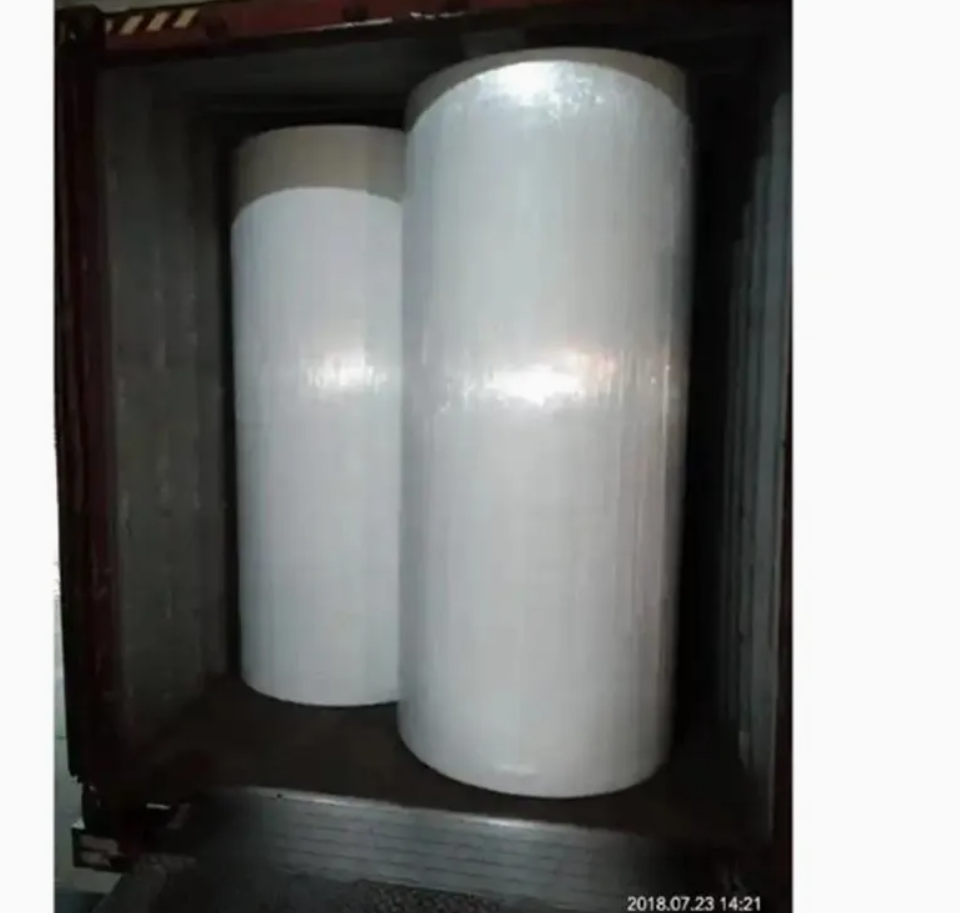
Packaging and labels: reels wrapped in stretch/PE film with edge protection for sea freight; each reel labelled with GSM, width, ply, batch number, weight and production date; reels protected from the container floor.
Cut representative samples from the outer, middle and inner layers of several reels, condition them in the laboratory at 23 °C and 50% relative humidity to equilibrium, and test against the ISO 12625 series. Results are only comparable when the standard conditioning and test direction (machine direction / cross direction) are followed.
Property | Test method | Typical acceptance reference |
|---|---|---|
Grammage (basis weight, GSM) | ISO 12625-6 | Per agreed GSM (toilet 14–22, facial 14–18, napkin 16–22, kitchen 32–40); batch tolerance typically within ±3–5% |
Moisture content | ISO 287 | Commonly 4–7%; too dry = brittle/dusty, too wet = weak and mould risk |
Tensile strength (dry) | ISO 12625-4 | N/m, machine & cross direction; must meet the agreed minimum for high-speed unwinding |
Wet tensile strength | ISO 12625-5 | N/m after wetting; critical for kitchen and hand-towel grades and wet-strength toilet paper |
Thickness / bulk | ISO 12625-3 | Bulking thickness and bulk; higher bulk = softer, more absorbent TAD-style sheets |
Brightness / colour | ISO 12625-7 | ISO brightness per contract (virgin white grades commonly around 80–90%+); consistent across the lot |
Water-absorption time & capacity | ISO 12625-8 | Basket-immersion method; fast absorption time and high capacity for towel grades |
pH value | ISO 6588-1 | Typically about 4.4–8.5, protecting skin and avoiding machine corrosion |
Read each property against the end product: kitchen and hardwound towel converters focus on wet tensile strength and absorption; facial tissue on softness, bulk and low dust; toilet paper on a balance of dry strength and softness; napkins on uniform grammage and folding performance.
Alongside the paper tests, measure the physical roll against your machine's limits:
Width: within a tight tolerance of the ordered width (often ±2 mm), because the parent width must divide cleanly into your finished width and number-up.
Core inner diameter: standard 76 mm (3 inch); check the core is round, not crushed, and that the wall thickness is uniform so it grips the shaft.
Roll diameter: matches the order (typically up to about 1,150 mm) and does not exceed your rewinder's maximum.
Net weight and meterage: weigh sample reels and reconcile the weight with GSM, width and width × length; the calculation should agree with the mill's stated length and the finished-roll yield.
Reels per container: verify the count and loading against the agreed plan.
Do not judge the whole lot from one reel. Agree a written sampling plan before production:
Define the lot and AQL. Sample reels across the batch (and across containers) using an AQL table — for visual defects many exporters use AQL 2.5 major / 4.0 minor, while lab tests are run on a fixed number of sample reels.
Inspect at the right stage. Pre-production samples approve the grade; during-production (DUPRO) checks catch the run; a pre-shipment inspection (PSI) after 100% production and at least 80% packing verifies the final lot.
Use an independent third party. SGS, Büro Veritas (BV), TÜV or a local accredited inspector can perform container loading supervision (LS) and seal the container, giving unbiased evidence for payment and claims.
Keep records. Photograph reel labels, roll ends, any defects and the container number, and retain the test report against the bill of lading.
For a complete view of the category, see the toilet tissue parent roll overview and the per-grade pages for toilet paper, facial tissue, napkin, kitchen towel and hand towel jumbo rolls.
Q: How do you check the quality of a tissue jumbo roll?
A: Check the documents and certifications first, then inspect reel winding, sheet defects, splices, packaging and labels; cut and condition samples (23 °C, 50% RH) and test grammage (ISO 12625-6), moisture (ISO 287), dry and wet tensile strength (ISO 12625-4/-5), brightness (ISO 12625-7) and absorbency (ISO 12625-8); finally verify width, 76 mm core, diameter and weight, using an agreed AQL sampling plan.
Q: What is the standard moisture content of tissue paper?
A: Tissue parent rolls are typically produced and shipped at about 4–7% moisture. Paper that is too dry becomes brittle and dusty; paper that is too wet loses strength and can develop mould on a long sea voyage.
Q: What is an acceptable GSM tolerance for parent rolls?
A: Converters commonly hold grammage within about ±3% on a container lot and ±5% on individual samples. Confirm the exact figure in the contract because it directly changes the number of finished rolls per ton.
Q: Which ISO standard tests tissue tensile strength?
A: Dry tensile strength, stretch and tensile energy absorption use ISO 12625-4; wet tensile strength uses ISO 12625-5. Grammage is ISO 12625-6, brightness ISO 12625-7, water absorption ISO 12625-8, thickness and bulk ISO 12625-3, and moisture ISO 287.
Q: How many splices are allowed in a jumbo roll?
A: There is no single universal number; the limit is set in the purchase contract, and export jumbo rolls commonly allow 0–2 splices per reel. Every splice must be clearly flagged at the edge so the converting line is not caught by an unexpected break.
Q: Do I need third-party inspection for tissue rolls?
A: It is recommended for first orders and large containers. SGS, BV or TÜV pre-shipment inspection and container loading supervision provide independent evidence, and for buyers new to a supplier they more than pay for themselves.
HUAXIN Global supplies ISO 9001 / FSC-supported tissue parent rolls across the full 11–42 GSM and 200–2850 mm width range, with a batch test report for every lot and a written pre-shipment QC checklist covering grammage, moisture, tensile and wet strength, dimensions and splices. Contact us with your target GSM, width, core and tonnage for a specification sheet, free samples and a loading plan; more standard answers are on our FAQ page.