close
Choose Your Site
Global
Social Media
Views: 0 Author: Site Editor Publish Time: 2026-09-24 Origin: Site
Grams per Square Meter (GSM) dictates the tactile quality, durability, visual opacity, and unit economics of paper products. Procurement managers and OEM brands face a constant tension on the production floor. You must balance consumer expectations for softness, wet strength, and a premium feel against raw material costs, shipping weights, and environmental impact. Selecting the wrong paper weight leads to structural failure during use or unnecessary financial waste in the supply chain. We see this happen when buyers prioritize bulk pricing over fiber integrity.
This technical evaluation guide provides a clear framework for selecting the optimal facial tissue GSM based on market tier, ply configuration, fiber source, and end-use application. By understanding how basis weight interacts with converting machinery and pulp blends, you can engineer a product that meets both performance standards and logistical requirements without overspending on raw pulp.
Standard Ranges: The industry standard for single-sheet facial tissue GSM typically falls between 12 and 18 GSM, depending on the target market (economy vs. premium).
The Ply Multiplier: Total basis weight is a function of single-sheet GSM multiplied by ply count; a 3-ply 14 GSM tissue often outperforms a 2-ply 18 GSM tissue in perceived softness and structural integrity.
Performance Trade-offs: Higher GSM increases tensile strength, wet strength, and opacity, but can compromise softness and increase raw material costs if not engineered with premium pulp.
Procurement Reality: Specifying the right GSM requires aligning the product with specific dispenser constraints, alternative fiber choices (like bamboo), logistics budgets, and sustainability targets.
Table of Contents
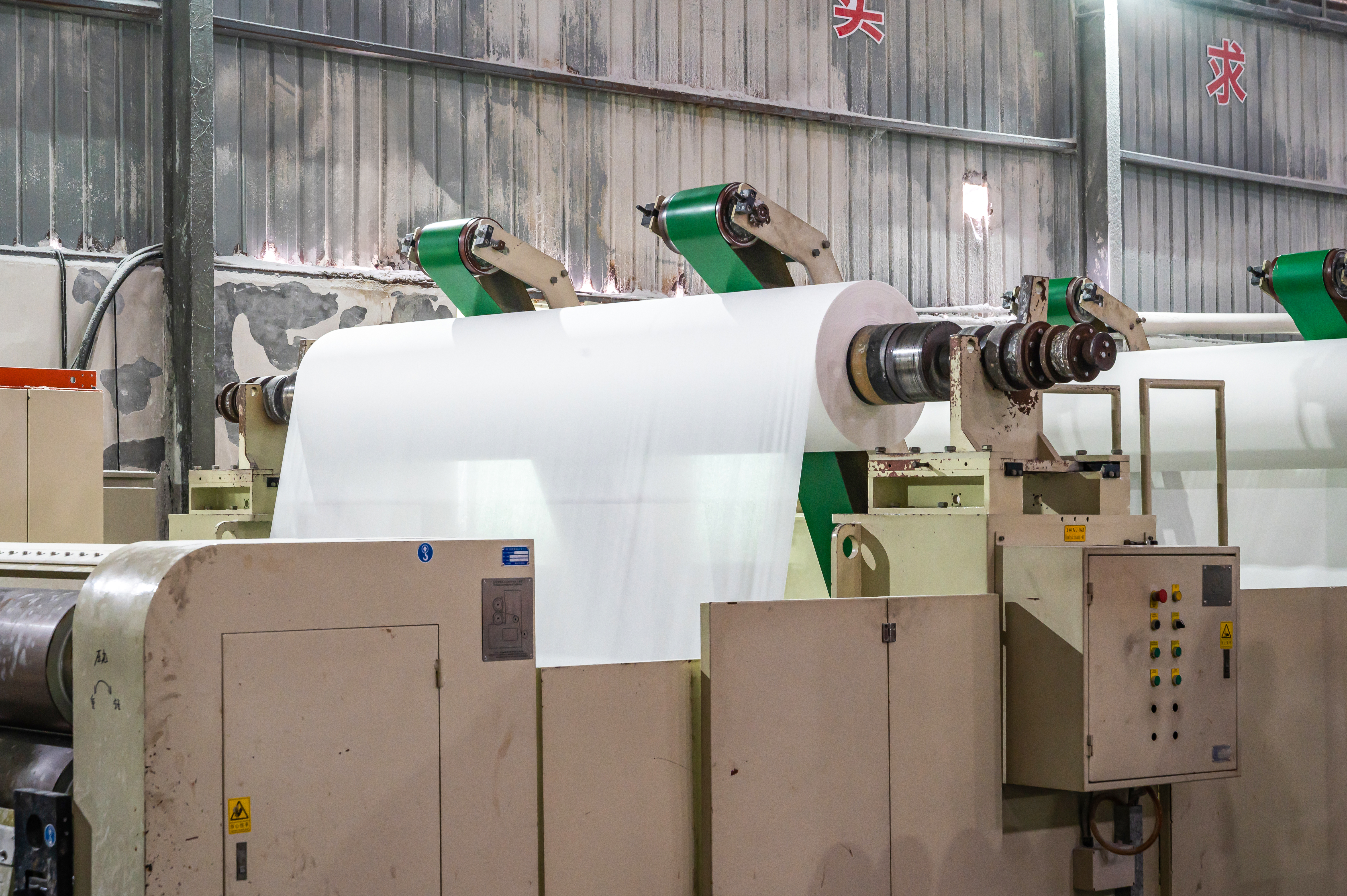
Grams per Square Meter measures the physical mass of one square meter of paper. On the production floor, operators control this metric by adjusting the pulp flow out of the headbox onto the forming wire. A higher flow rate deposits more fiber, increasing the density and physical weight of the web. This measurement dictates how the paper behaves during the converting process, specifically how it handles tension through the embossing rollers and folding plates. A higher number indicates a denser, heavier sheet of paper, while a lower number indicates a lighter, thinner sheet.
Different paper products require drastically different basis weights to function correctly on the converting line and in the consumer's hands. Bath tissue requires rapid dispersion in water to prevent plumbing blockages. Manufacturers engineer it with low wet strength and lower basis weights, prioritizing flushability over structural integrity. Custom packaging tissue operates on the opposite end of the spectrum. Packaging applications utilize 17 to 28+ GSM to prioritize structural integrity, wrapping capability, and crisp folding over skin-feel.
The ideal facial tissue sits squarely between these extremes. It must withstand moisture from sneezes or spills while remaining soft enough to prevent skin irritation during repeated use. Achieving this requires precise engineering of the paper web, balancing fiber length and chemical additives to ensure the sheet holds together without feeling like abrasive cardboard.
GSM alone does not determine tissue quality because fiber type also affects strength, softness, and absorbency. Virgin softwood pulp provides good strength, while hardwood pulp such as eucalyptus improves surface smoothness. Recycled fibers are usually shorter and may require a higher GSM to achieve similar strength. Bamboo pulp can also provide good absorbency and tear resistance, so buyers should consider both GSM and fiber type when choosing facial tissue.
Manufacturers categorize tissue weights into distinct tiers. Each tier serves a specific market segment and end-use application. Selecting the appropriate tier requires aligning product performance with consumer expectations and manufacturing capabilities.
12–14 GSM tissue is lightweight and cost-effective, making it suitable for budget retail, offices, and high-traffic commercial locations. It uses less material and can reduce shipping weight, but a single sheet may be thin and transparent. It is often used in 3-ply or 4-ply products to improve strength and thickness.
15–16 GSM is a common choice for everyday facial tissue because it provides a good balance of softness, strength, and cost. It is strong enough for normal use without feeling too stiff or looking too transparent. This range is commonly used for 2-ply retail and private-label facial tissue products.
17–18+ GSM tissue is thicker, stronger, and more absorbent, making it suitable for premium retail products, hotels, and lotion-infused tissues. The stronger fiber structure can support additives such as aloe or mineral oil while maintaining good wet strength. It provides a softer, heavier feel but requires more raw material and usually costs more.
GSM Range | Target Market | Key Characteristics | Common Ply Configurations | Converting Complexity |
|---|---|---|---|---|
12–14 GSM | Economy, Commercial | Cost-effective, highly transparent, requires multiple plies. | 3-Ply, 4-Ply | High risk of web breaks due to low tensile strength. |
15–16 GSM | Standard Retail | Balanced softness and strength, versatile, non-transparent. | 2-Ply, 3-Ply | Standard tension control, highly stable on V-fold machines. |
17–18+ GSM | Premium, Hospitality | Luxurious feel, high wet strength, supports lotion additives. | 2-Ply, 3-Ply | Requires heavy-duty embossing and precise calendering. |
Evaluating single-sheet weight provides only half the picture. The total basis weight of the finished product dictates the actual user experience. Ply configuration drastically alters how the paper performs on the line and in the home.
Layering multiple low-weight sheets creates microscopic air pockets between the plies. These air pockets enhance perceived thickness and improve liquid absorbency. A multi-ply structure performs better than a single high-weight sheet because the air gaps act as insulation and fluid reservoirs. The embossing process bonds these plies together, creating a unified sheet that traps moisture effectively.
Procurement teams calculate the total basis weight to understand raw material usage. Multiply the single-sheet weight by the number of plies. Three plies of 13 GSM paper equal a 39 GSM total basis weight. Two plies of 16 GSM paper equal a 32 GSM total basis weight. A 39 GSM sheet feels significantly bulkier than a 32 GSM sheet, even though the individual plies are lighter.
Choosing between a heavier 2-ply and a lighter 3-ply requires a strict decision framework. You must evaluate the following factors:
Assess the converting line's embossing capabilities and ply-bonding technology.
Evaluate the target dispenser dimensions to ensure the folded stack fits without jamming.
Determine the required liquid absorption capacity for the target demographic.
Calculate the maximum allowable roll diameter for packaging constraints.
Analyze consumer tactile preferences in the target regional market.
Selecting the correct paper weight requires evaluating multiple technical dimensions. Each dimension impacts the final user experience and the manufacturing process.
Higher GSM does not always make facial tissue softer. Heavy paper can feel stiff if the creping and finishing processes are not properly controlled. Fiber quality, fiber direction, and surface treatment also affect softness. Manufacturers should balance GSM and production settings to achieve a soft and comfortable feel.
Low-GSM tissue can look thin and transparent, especially when it has fewer plies. A higher GSM improves opacity and can make the tissue look stronger and more premium. Around 15 GSM can provide a good balance between appearance, softness, and weight for standard facial tissue.
Higher GSM tissue contains more fibers, which can improve liquid absorption and wet strength. Wet strength additives can also help the tissue stay together when exposed to moisture. This is especially useful for premium 17–18 GSM facial tissue that requires better absorbency and durability.
Facial tissue needs enough strength to be pulled from a box without tearing. Paper that is too light may tear easily, while heavier multi-ply tissue can create a thick stack that causes dispensing problems. The GSM, ply count, and folded thickness should be balanced to ensure smooth dispensing from V-fold or Z-fold tissue boxes.
Technical specifications directly impact unit economics. Adjusting the paper weight alters the entire supply chain, from raw material procurement to final freight delivery.
Higher GSM requires more pulp and increases production costs, especially for large OEM orders. Heavier tissue also reduces the amount of paper produced from each jumbo roll and may require more frequent roll changes. Buyers should compare cost per case and production yield before choosing a higher GSM.
Higher GSM increases the weight and thickness of facial tissue, which can raise shipping costs and require larger packaging. Thicker tissue stacks may need bigger boxes, and fewer boxes may fit on each pallet or shipping container. Buyers should consider packaging size, pallet capacity, and transportation costs when selecting tissue weight.
Lower GSM tissue generally uses less fiber, water, and energy during production, while heavier paper requires more resources. Premium products can use 17–18 GSM to balance quality and material use. Alternative fibers such as bamboo can also be considered when improving the sustainability of facial tissue products.
Transitioning to a new paper specification carries inherent operational risks. Anticipating these pitfalls prevents costly manufacturing errors and supply chain disruptions.
Inconsistent GSM can cause changes in tissue quality between production batches. Paper that is too light may become transparent or tear easily, while paper that is too heavy can create packaging problems and increase costs. Buyers should set a clear GSM tolerance, usually ±0.5 to ±1 GSM, and require suppliers to check each batch for consistency.
Higher GSM does not always mean better facial tissue. Paper that is too heavy may feel stiff and reduce softness, which can affect the user experience. Buyers should test different GSM samples before placing large orders and compare their softness, flexibility, and overall feel to choose the right weight.
High-GSM or multi-ply tissue can become too thick for some dispensers or tissue boxes, causing jams or tearing during use. Buyers should check the total paper weight, folded size, and dispenser dimensions before production. Testing samples in the final dispenser or packaging can help confirm smooth dispensing.duction. Ensure the pull-force dynamics remain smooth from the first sheet to the last.
There is no universally best paper weight for every application. The optimal choice is a calculated alignment of target market expectations, ply count, fiber type, and raw material budgets. Balancing these variables ensures a product that performs well and remains financially viable. Recommend 13-14 GSM for 3-ply economy and standard commercial applications. Recommend 15-16 GSM for 2-ply premium retail applications. Reserve 17-18 GSM for specialized, hospitality, or lotion-infused lines where tactile luxury is paramount.
To move forward effectively, execute the following steps:
Request physical samples across a matrix of weights and ply configurations from your manufacturing partners.
Evaluate the visual opacity and surface softness of each sample in varying lighting conditions.
Conduct standardized wet-strength testing to determine the blow-through point for each configuration.
Calculate the fully landed costs per case, factoring in raw material yield and adjusted freight classifications.
Perform physical dispensing tests using the final OEM packaging die-lines to verify pull-force reliability.
A: The industry standard typically ranges from 12 to 18 GSM per single sheet. Economy and commercial products usually utilize 12-14 GSM. Standard retail products sit in the 15-16 GSM range. Premium and lotion-infused tissues generally require 17-18 GSM to support added moisture and deliver a luxurious feel.
A: Total basis weight is calculated by multiplying the single-sheet weight by the number of plies. For example, a 3-ply tissue made of 14 GSM paper has a total basis weight of 42 GSM. Multiple lighter plies often provide better perceived bulk and absorbency than a single heavy ply.
A: No. While higher weight increases durability and thickness, it can make the paper feel stiffer and rougher if the manufacturing processes, like calendering and creping, are not properly optimized. Softness depends heavily on fiber quality, creping blade angles, and surface finishing, not just physical weight.
A: Lotion-infused tissues require a denser fiber matrix to absorb and hold chemical additives without degrading the paper's structural integrity. A heavier weight, typically 17-18 GSM, provides the necessary wet strength to prevent the tissue from wetting out or falling apart in the packaging before use.
A: Higher paper weight increases the actual physical weight of the finished product. This alters freight classifications and increases shipping costs. Thicker tissues require larger packaging, which reduces the number of units that fit on a standard shipping pallet, decreasing cube efficiency in shipping containers.
A: Yes. Bamboo fibers are naturally longer and offer higher tensile strength than many recycled wood pulps. This allows manufacturers to achieve excellent tear resistance and absorbency at a slightly lower weight, improving resource efficiency without sacrificing product performance or tactile quality.